


🇨🇱 Roadtrip from North to South of Chile in 2 weeks
- Sep 6, 2025
- 8 min read
Updated: Nov 28, 2025
How could we ever forget this wonderful journey from the north (Antofagasta) to the south of Chile (Chiloé)?
It was our first trip as parents! This year marks 10 years since that very first trip...
...with a 7-month-old baby! (in our opinion, the best age for long road trips—he slept through most of the long stretches!)
So many kilometers covered by car ≈ 5,200 km! (not even counting detours inland!)
We crossed deserts, valleys, lakes, forests, islands! One day we were in the driest desert in the world, under the clearest skies on the planet… and the following week we were driving through torrential rain outside of Valdivia.
Please note: All accommodation recommendations are budget-friendly options. If you’re looking for four- or five-star hotels, please ignore the suggestions below 🤭.
Day 1: Antofagasta to La Serena
🚙 Between 10 to 12 hours (not including stops) from Antofagasta ⇢ La Serena
Tip: We started the journey from the north because that's where we were based back then, but for most of visitors to Chile it would make more sense to rent a car and start in Santiago and head south, in that case jump to Day 4.
Recommendations for driving long distances in Chile:
if you do happen to travel from north to south: leave very early (ideally before sunrise) to make the most of daylight along the route.
Plan intermediate stops to rest: Copiapó is a good halfway point to refuel, grab a meal, and stretch your legs.
Fuel: in the desert, long stretches without gas stations are common—fill up your tank before leaving and refuel again in larger cities.
Hydration & snacks: bring plenty of water and some light food—the drive can be monotonous with few options in some stretches.
Check weather and road conditions: sometimes there’s intense coastal fog (“camanchaca”).
Entertainment for kids: music, podcasts, stories, games.
Scenic stop: Desierto Florido (if traveling in season, around September).
Safety: respect speed limits, as there are frequent controls and stretches with many mining trucks.
Stayed at La Hostal de Rosita
Days 2 - 3: Papudo or Concón, Viña del Mar, Valparaíso
🚙 Between 4–5 hours from La Serena ⇢ Papudo / Viña del Mar
In Valparaíso we stayed at: 📍 Hostal Maison de la Mer
Other accommodation options: Casa Puente Hotel Boutique, Hotel Boutique 17.
Trying to push the baby stroller through the steep, cobblestone streets of historic Valparaíso was an adventure in itself!

Valparaíso... is a rainbow of so many colors 🎶 Song by Joe Vasconcellos 📍 Cerro Alegre y Cerro Concepción: wander through murals, colorful houses, and cafés overlooking the port. Stroll around and enjoy a coffee at one of the cafés near 📍 Paseo Yugoslavo.
Or visit one of Pablo Neruda’s former homes:📍 La Sebastiana.
Day 4: Santa Cruz, Talca
🚙 Approx. 3 hours from Valparaíso ⇢ Santa Cruz
"I like wine, because wine is good" ⎯ Chilean singer-songwriter Tito Fernández
There are plenty of vineyards to visit; we went to Viu Manent, located in the Santa Cruz area.

Horse Carriage tour 
Wine Tasting (Optional)
🚙 Approx. 1.5 hours from Santa Cruz ⇢ Talca
We stayed near Talca. Some accommodation suggestions: Hotel Madero Talca and Lodge Casa Chueca
You can also consider staying in these cities: Chillán and Los Ángeles.
Day 5: Saltos del Laja and Temuco
🚙 Approx. 2.5 hours from Talca ⇢ Saltos del Laja
The Saltos del Laja waterfalls may have less flow during the summer drought, although the intensity depends on that year’s rainfall and snowmelt.

🚙 Approx. 2.5 hours from Saltos del Laja ⇢ Temuco
We stayed in Temuco (to keep heading south), but you could consider staying in Concepción if you prefer a coastal city.
Day 6: Parque Nacional de Conguillío
🚙 Approx. 1.5 hours from Temuco ⇢ Conguillío National Park
Conguillío National Park is simply breathtaking, home to ancient araucaria trees, some over 1,000 years old. That’s why National Geographic included it among the “last pristine places on the planet.” Its landscapes were even used as a setting in BBC documentaries about the dinosaur era—because it truly looks like a prehistoric forest. The Llaima Volcano, one of the most active in South America, is inside the park and has shaped much of the terrain with eruptions and lava flows.


Swimming in the super cold waters of Conguillio lake
🚙 Approx. 1.5 hours from Conguillío National Park ⇢ Villarrica
We had planned to stay in the Villarrica–Pucón area, but because the Villarrica Volcano erupted on the very day we were supposed to go, we had to change course! 🌋
Days 7 - 8: Valdivia
🚙 Approx. 2 hours from Villarrica / Pucón ⇢ Valdivia
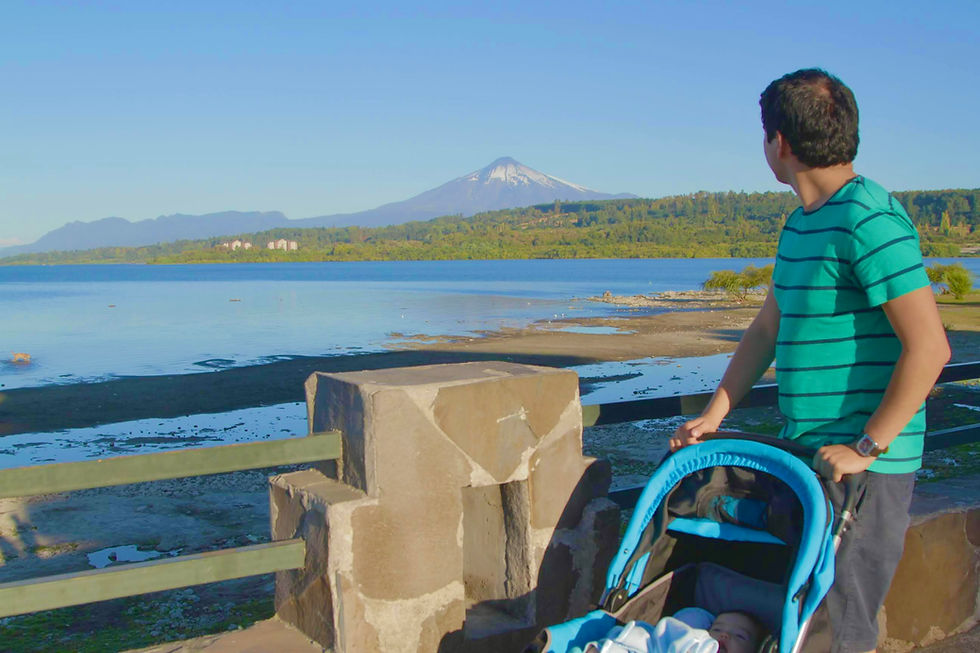
In Valdivia, we learned about the May 1960 earthquake — the strongest ever recorded in history, with a magnitude of 9.5. It shook Valdivia for more than 10 minutes and triggered a tsunami that swept across the Pacific, reaching as far as Hawaii and Japan. The quake changed the geography: part of the city sank, and Lake Riñihuazo was born.

Days 9 - 10: Frutillar and Puerto Varas
Both towns share German heritage, stunning views of the imposing Osorno Volcano and Lake Llanquihue, and stand out for their southern charm — where you can enjoy exquisite local cuisine, music festivals, and water sports.
🚙 Approx. 2 hours from Valdivia ⇢ Frutillar
In Frutillar, we had lunch at Restaurant Cocina Frau Holle — we have such beautiful memories of this charming spot! Highly recommended.
🚙 Approx. half an hour from Frutillar ⇢ Puerto Varas
Budget accommodation in Puerto Varas: Margouya , MaPatagonia
For families with kids you can consider: Dein Haus Hotel

If you only have one day in each place, I would recommend:
Frutillar: Theatre at the Lake + coffee and kuchen + Museum.
Puerto Varas: a walk along the waterfront + a meal with a view + Saltos del Petrohué (if time allows).
Days 11 - 12: Chiloé
🚙 Approx. 2.5 hours from Puerto Varas ⇢ Ancud, Chiloé
If you have time, you could stop for breakfast or lunch in Puerto Montt, or even stay overnight there.
In our case: we crossed the Chacao Channel by ferry and explored the Isla Grande of Chiloé — the largest island in Chile, famous for its UNESCO World Heritage wooden churches and the palafitos (stilt houses) of Castro, iconic to the region.

We rested in Ancud, then continued our journey to Castro.
🚙 Approx. 1.5 hours from Ancud ⇢ Castro
There is so much to see, eat, and do in Chiloé — we really wish we had more time on this amazing island. Especially at Chiloé National Park.
The park combines Valdivian rainforest, dunes, tepual thickets, and ancient forests that are home to species such as the pudú (a tiny deer), the Chiloé fox, the monito del monte (a rare marsupial), and various seabirds.
Tip: Arrive early! From Monday to Thursday, the park opens at 9:30 am and closes at 5 pm (last entry at 4 pm). On public holidays, it opens at 9:30 am and closes at 4:30 pm (last entry at 3:30 pm).
Family-friendly trails:
El Tepual (~1 km, easy, perfect for kids)
Dunas de Cucao (~3 km, trail with ocean views)
Playa Cucao (~1.5 km, panoramic and great for walking)

Day 13 : Panguipulli
🚙 Approx. 6 hours from Ancud ⇢ Huilo-Huilo, Panguipulli
Ya de vuelta al norte, pasamos por: Reserva Biológica de Huilo Huilo, Back northward, we passed through Huilo Huilo Biological Reserve. We didn’t have the budget to stay in those beautiful and luxurious hotels! 😅, But we did explore the biological reserve, which offers countless trails, adventure activities, spa and hot springs, among other things… and although it’s quite far from the main road, the detour is definitely worth it!

Days 14 - 15: Santiago
🚙 Approx. 9 hours from Panguipulli ⇢ Santiago
(Suggested rest stops: Los Ángeles and/or San Fernando). If you’re not from Santiago, make sure to check automatic tolls (TAG) or daily passes available.
Santiago, Capital of Chile: We visited parque del Bicentenario, which has wonderful city views. There are so many things to do in the capital, but this time we were just passing through!
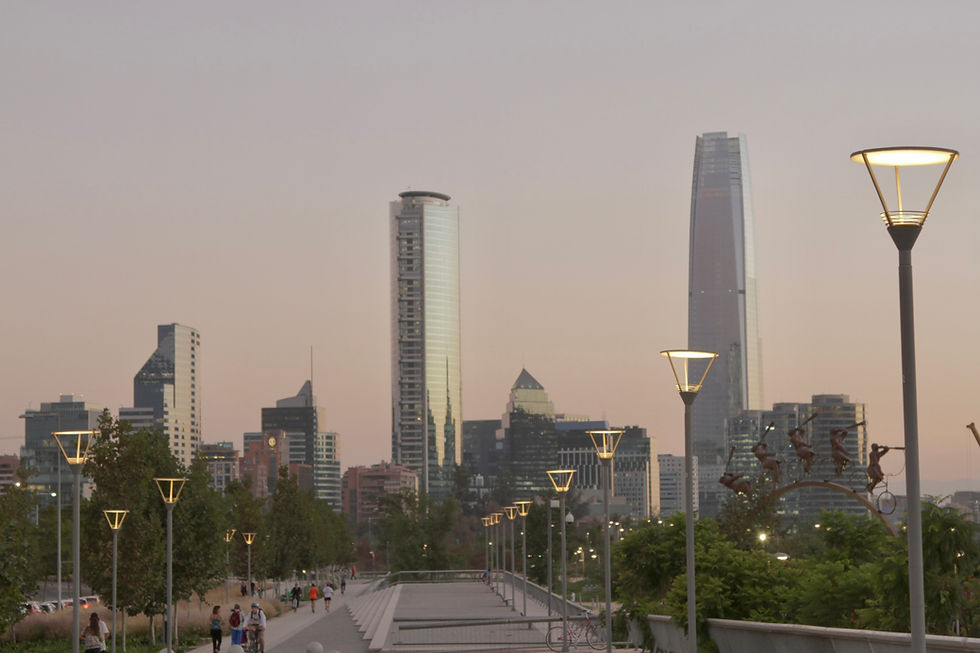
Some accommodation suggestions: La Cascarona, Casa de Todos, Hotel Capital Bellet
If you need to return the rental car in Santiago, this would be the end of your trip! But for us we continued traveling to the north:
Day 15: Bahía Inglesa, Caldera
🚙 Approx. 9 hours from Santiago ⇢ Bahía Inglesa (Suggested rest stops: Ovalle and/or Vallenar)
The last stop before returning to Antofagasta was Bahía Inglesa. It’s famous for its white sands, considered among the most beautiful beaches in Chile.
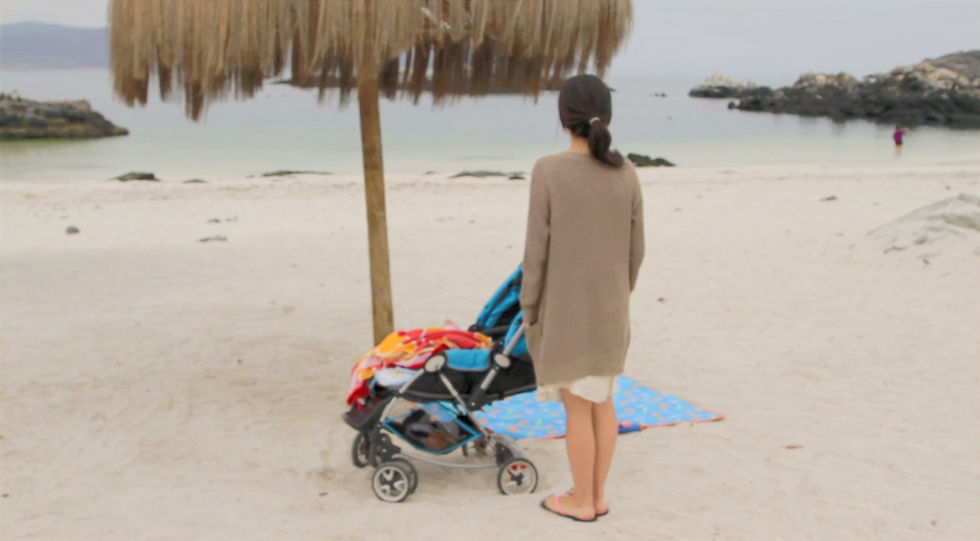
Day 16: End of the trip
🚙 Approx. 5.5 hours from Bahía Inglesa ⇢ Antofagasta
Was it tiring spending so many hours in the car? Yes, but that’s not what you “remember”!
It was obviously tiring, especially for the driver on the longest stretches! But it was also an amazing trip because Chile has truly majestic landscapes, and driving through the south is worth it. Stopping for a cow in the middle of the road… a flock of sheep, a rainbow, or simply because the trees were too beautiful! It was incredibly special exploring on wheels with our favorite soundtrack for every landscape.
Approximate costs of the trip in Chilean pesos (2015)
Gasoline: 370,000
Lodging: 370,000
Tolls: 250,000
Meals: 300,000
Miscellaneous: 100,000
≈ 1,400,000 CLPFor two adults and a baby under 1 year old
As of 2025, the total cost of the trip would likely be probably more than double the amount.
"Twenty years from now you will be more disappointed by the things you didn’t do than by the ones you did." — attributed to Mark Twain
I read this quote somewhere as a teenager and always keep it in mind… especially when asked:
Why do we travel?
Reflecting on past adventures, many thoughts come to mind — what do you think?
Life itself is a journey, and each step invites us to discover not only the world but also our purpose in it. When we travel, so many analogies with life emerge!
By contemplating nature and marveling at its diversity of landscapes, animals, and plants, we remember that we are pilgrims on this Earth, called to enjoy it and, importantly, take care of it.
Because stepping out of the routine creates space to learn and be inspired: from solving unexpected problems together to marveling at a sudden view.
Traveling is not just moving on the map — it’s expanding your perspective and your heart. It reminds us we are small in a vast world and gives us perspective.
Encountering different realities strengthens empathy and invites us to build bridges rather than walls.
Shared experiences along the way become family memories that last a lifetime — far more than material objects.
💜 We are grateful that during this season of life we are blessed to travel as a family. But we do know that it’s not always possible to travel (for financial reasons, health, caregiving for a family member, or political circumstances where you live), and actually not everyone enjoys traveling!
But whatever the circumstance, our hope is that we can live the present with purpose and wonder, take time to ask questions, reflect… keep growing, and hopefully contribute something positive to our surroundings.
We hope this information is useful for planning your next trip or serves as inspiration!
Follow us on Instagram and feel free to share these resources with friends and family.


Comments